
The Navi Mumbai real-estate growth story: past, present & future
The plan
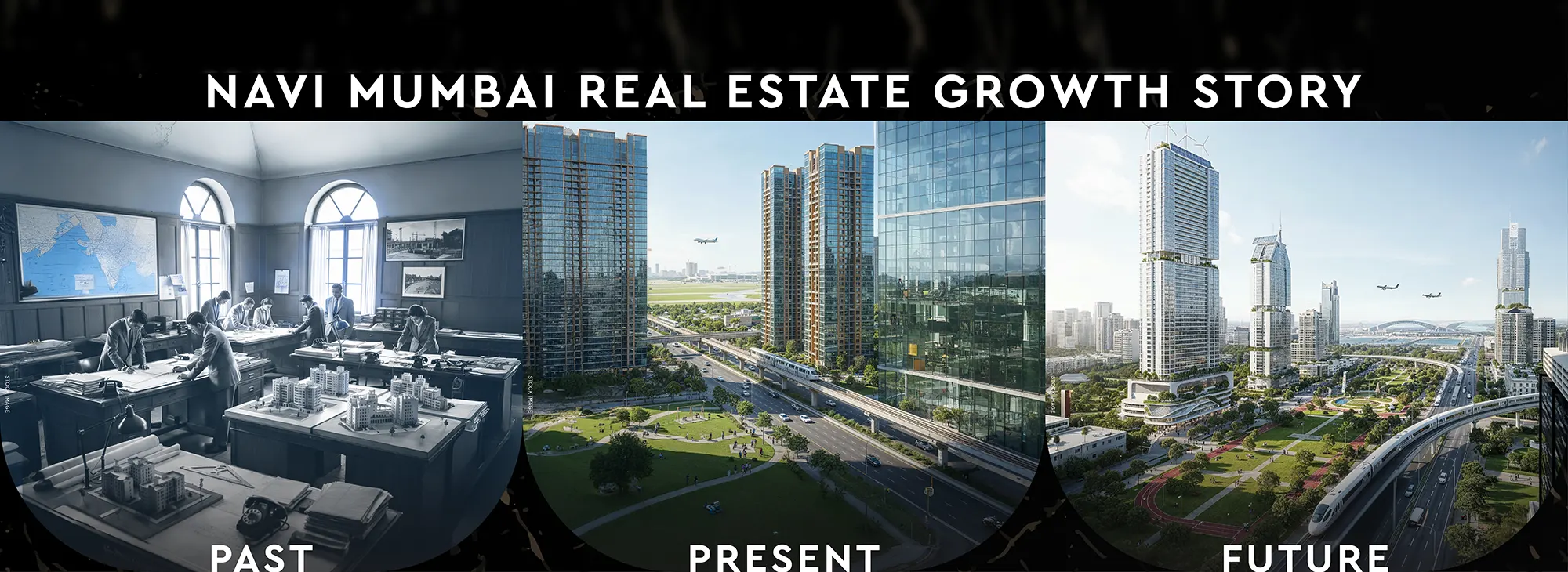
Navi Mumbai was conceived in 1970 as a counter-magnet to a crowded island city — a planned, node-based settlement built by CIDCO across the mainland east of the harbour. For its first decades it grew slowly, node by node, as roads and the harbour line reached each sector.
The turn
The change came when Navi Mumbai stopped being defined by Mumbai. Offices along the Thane–Belapur belt, IT parks, and better internal transport gave residents reasons to live and work on the same side of the water. Vashi, Nerul, Seawoods and Kharghar matured into destinations with their own centre of gravity.
The next chapter
The airport, the Atal Setu and the metro are now pulling growth south and east — into Ulwe, Panvel, Dronagiri and Uran. This is the ‘Mumbai 3.0’ phase: an airport city taking shape on land that was farmland a decade ago.
What it means for a buyer
The established nodes offer certainty and easy resale. The airport corridor offers a lower entry and a longer story. Both are the same market at different points in its cycle — and the through-line, as it has been since 1970, is infrastructure arriving on schedule.
A GAMI Group editorial note. General information only — confirm current prices, charges and project details before you act on them. No publication date or author is attached.