
Mumbai 3.0 explained: the new growth corridor for real-estate investment
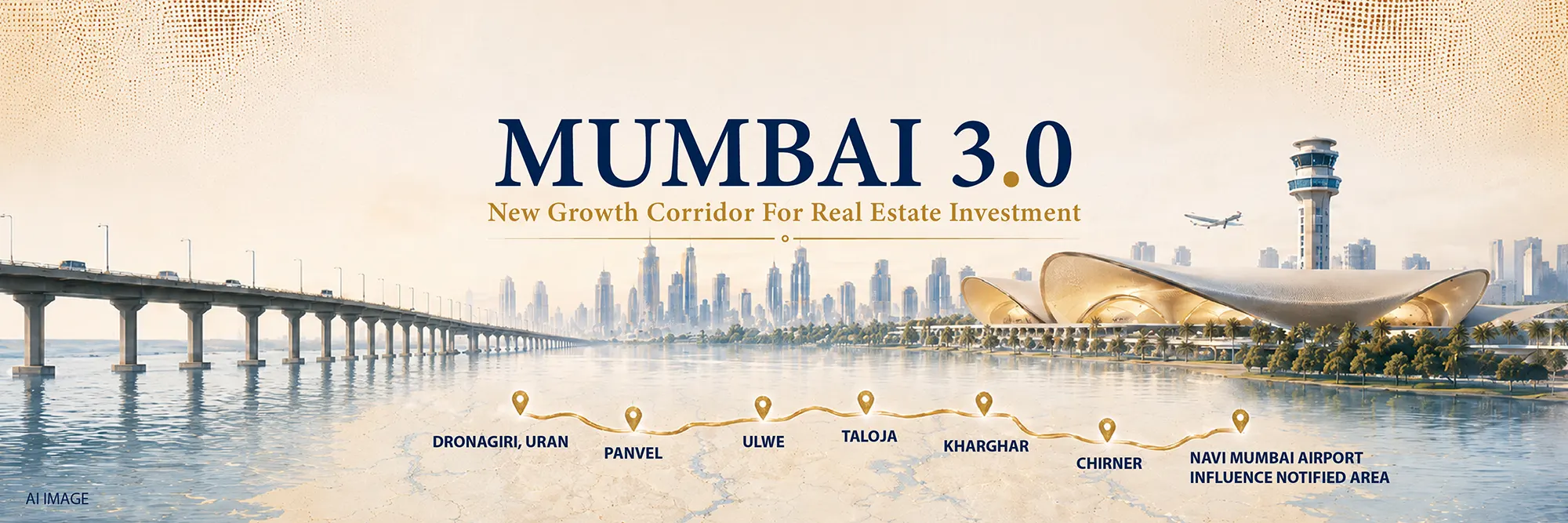
Mumbai has always grown by moving outward. South Mumbai carried the city through the second half of the last century; the western and central suburbs absorbed the next wave of demand from the 1990s. The area now being called ‘Mumbai 3.0’ — or the Third Mumbai — is the region taking on that role today: Panvel, Ulwe, Dronagiri and Uran, together with the surrounding parts of Navi Mumbai.
What holds it together
The organising idea is the Navi Mumbai International Airport. Its first phase is designed for roughly 20 million passengers a year, with later phases planned to take capacity far higher. Around it sit the pieces that make an airport city work: the Atal Setu sea link, which brings South Mumbai within a short drive of the Navi Mumbai side; expanding metro connectivity; and NAINA, the planned-development authority covering the wider catchment.
How the nodes differ
Panvel is the established anchor — the best road and rail connectivity of the group, and the closest thing to a finished town. Ulwe is the node most directly tied to airport-led growth, with social infrastructure still filling in. Dronagiri is the earliest-stage of the three, which is exactly why its entry price is the lowest — a longer-horizon position rather than a ready-to-move one.
Reading it as a buyer
Infrastructure is doing the work here, and infrastructure timelines slip. A home in Mumbai 3.0 is a bet that the airport, the bridge and the metro all land close to plan. For an end-user who wants a larger home near that growth, the case is straightforward. For an investor, the question is patience: the further out the node, the lower the price and the longer the wait.
A GAMI Group editorial note. General information only — confirm current prices, charges and project details before you act on them. No publication date or author is attached.